
Musselcracker
Sparodon durbanensis
The white musselcracker or brusher: a big, powerful trophy fish caught from the rocks in white water on shellfish and crab.
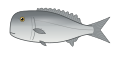
Size: A 60 cm fish, the minimum size, weighs about 3.5 kg, and an 80 cm fish about 8 kg. They can pass 1 m, and the SA spearfishing record is 22.2 kg.
Where: Endemic to South Africa, from Cape Point to the Thukela River in KZN, with the main stock between southern KZN and False Bay.
How to spot it
A silver to silvery-blue fish with a large, heavy head that grows bigger with age, a very thick upper lip and a white chin and chest. The upper jaw overlaps the lower, and the middle two of its four big front teeth are large and curved, like buck teeth. The soft fins and tail are dusky.
Varieties and look-alikes
-
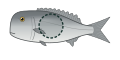 Musselcracker - Silver to silvery-blue all over, never black.
-
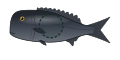 Black Musselcracker - Dark grey to black all over, with dark fins.
What it eats
Crushes snails, sea urchins, crabs and worms off the reef with its big front teeth and molars, and also eats green seaweed. Young fish eat small snails, urchins and hermit crabs.
Where it feeds
- High rocky reefs close inshore, down to about 20 m
- White water around rocky points and ledges
- Gullies they move into on the incoming tide
- Rock pools and shallow reefs (young fish)
How to catch it
Fish from the rocks with heavy tackle: line of 18 kg or more, a strong trace and a strong hook on a sliding sinker setup. Cast a crab, redbait or a big bunch of mussel into the white water close to the rocks. When it takes, let it pull the rod down, then strike firmly and keep it out of the rocks with a tight drag.
| Way of fishing | How well it works |
|---|---|
| Bait on the bottomA sinker holds your bait still on the bottom. | Best |
| Under a bobberA bobber is a small buoy on your line: it holds the bait off the bottom and dips under when a fish bites. | Not used |
| Natural or dead baitReal food on the hook: worms, liver, sardine, chokka. | Best |
| Live baitA small live fish or other live creature on the hook. | Not used |
| LuresArtificial baits you cast and reel in: spinners, spoons, plastics. | Not used |
| TrollingLures or bait pulled behind a moving boat. | Not used |
| Fly fishingLight artificial flies, cast with a fly rod. | Not used |
Baits and lures that work
- Redbait
- Crabs
- Mussel
- Octopus
- Chokka (squid)
- White mussel
Flavours it likes
- Crustacean
- Mussel
- Squid
Use fresh, tough shellfish and crab baits rather than added flavours. A whole crab, or a big bunch of mussel or redbait, suits a fish that crushes shells.
When it bites
Time of day
| Time | Bite |
|---|---|
| Dawn | Best |
| Day | Good |
| Midday | Slow |
| Dusk | Best |
| Night | Slow |
Mostly a daylight feeder: the early morning and the late afternoon, before sunset, are best.
Best months
- Best: January, August, September, October, November, December
- Good: February, March, April, May, June, July
Best from September to December in the southern and Eastern Cape, when adults gather to spawn, with October and November the peak on the southern Cape coast. In KZN most are caught in June and July.
What affects the bite
| Condition | What it likes | Effect on the bite |
|---|---|---|
| Water temperature | Best at 15–21 °C | Low |
| Time of day | Best at dawn and dusk | Medium |
| Tide | Best on the incoming tide | Medium |
| Swell and surf | Best with some swell | High |
| Air pressure | Best when it is falling | Medium |
| Cloud cover | Best on overcast days | Low |
| Wind | Best with a light breeze | High |
| Rain | Best in dry weather | Medium |
| Water clarity | Best in clear water | Medium |
| Moon phase | Hardly matters | Low |
| Spawning | Feeds hard before and after spawning | Medium |
High means it makes a big difference to whether this fish bites. Low means it hardly matters.
Tips
- Fish the incoming tide, when they move into shallow water and gullies to feed.
- Look for clean, foamy white water over reef; dead flat or dirty water fishes poorly.
- Keep your fingers clear of the mouth: the big front teeth and crushing jaws can hurt you badly.
Good to know: Check the current rules: white musselcracker have a 60 cm minimum size and a bag limit of 2 per person per day, and may not be sold. They grow slowly, live over 30 years and gather to spawn, so consider releasing big fish.
Are they biting today?
BaitLine's fishing forecast scores today's conditions for Musselcracker hour by hour - free for everyone. Sign up free and get the whole Fishing guide in the app.