
Nile Tilapia
Oreochromis niloticus
An invasive alien kurper from further north in Africa, spreading in Limpopo rivers. It fights and eats well but threatens our blue kurper.
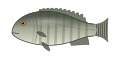
Size: It grows faster and bigger than blue kurper and can reach about 60 cm and over 4 kg.
Where: It reached South Africa down the Limpopo River from Zimbabwe and is spreading through rivers and dams in Limpopo and Mpumalanga. It also turns up in other dams where people stocked it.
How to spot it
A deep-bodied kurper with a small head and regular dark vertical stripes right across the tail fin, which is the surest way to tell it. Females are greyish-brown with about ten thin bars on the side. Breeding males turn bluish-pink, sometimes with a dark throat and belly. Hybrids with blue kurper also show the tail stripes.
Varieties and look-alikes
-
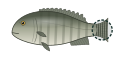 Nile Tilapia - Dark vertical stripes right across the tail fin.
-
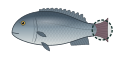 Blue Tilapia - Plain tail with no stripes, and a longer snout.
-
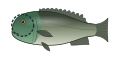 Greenhead Tilapia - Round, steep forehead with a green sheen on the head, and a plain tail.
What it eats
Mostly plankton and algae, plus insect larvae and other small animals. It takes bait less readily than blue kurper, but it still takes worms and small flies.
Where it feeds
- Shallow, weedy water with plenty of cover
- Reed edges where shoals push wakes on the surface
- Warm, slow river pools and quiet dam backwaters
How to catch it
Fish it like blue kurper: worms or bread under a bobber near weed and reeds, or pap on a small hook held on the bottom by a light sinker. On fly, small nymphs and streamers on a 5–7 weight rod work, with a slow figure-of-eight retrieve. Use at least 4–5 kg tippet near snags, because they run for cover.
| Way of fishing | How well it works |
|---|---|
| Bait on the bottomA sinker holds your bait still on the bottom. | Works well |
| Under a bobberA bobber is a small buoy on your line: it holds the bait off the bottom and dips under when a fish bites. | Best |
| Pap, mielies, boilies and floatsSweet baits on the hook (pap, mielies, boilies or floats), with more thrown in around them. | Works well |
| Natural or dead baitReal food on the hook: worms, liver, sardine, chokka. | Works well |
| Live baitA small live fish or other live creature on the hook. | Not used |
| LuresArtificial baits you cast and reel in: spinners, spoons, plastics. | Sometimes |
| Fly fishingLight artificial flies, cast with a fly rod. | Works well |
Baits and lures that work
- Earthworms
- Bread
- Pap
- Sweetcorn
- Nymphs
- Streamers and baitfish flies
Flavours it likes
- Krill
- Crustacean
- Garlic
Like other kurper, they respond to fresh, natural smells. Krill, prawn and garlic are good choices in pap or dough.
When it bites
Time of day
| Time | Bite |
|---|---|
| Dawn | Slow |
| Day | Best |
| Midday | Best |
| Dusk | Good |
| Night | Rarely |
Nile tilapia feed most from late morning through the afternoon, with peaks around noon and mid-afternoon. Early mornings are slower, and nights are poor.
Best months
- Best: January, February, March, November, December
- Good: April, October
It needs warmer water than blue kurper, so November to March is best. It stops feeding near 16 °C and dies below about 12 °C.
What affects the bite
| Condition | What it likes | Effect on the bite |
|---|---|---|
| Water temperature | Best at 24–32 °C | High |
| Time of day | Best during the day | Medium |
| Air pressure | Best when steady or falling | High |
| Cloud cover | Best on clear days | Low |
| Wind | Best with a light breeze | Low |
| Rain | Best in dry weather | Medium |
| Water clarity | Hardly matters | Low |
| Moon phase | Hardly matters | Low |
| Spawning | Hardly changes | Low |
High means it makes a big difference to whether this fish bites. Low means it hardly matters.
Tips
- Check the tail: dark stripes across it mean Nile tilapia or a hybrid, even if the fish looks like a blue kurper.
- Look for shoals working along the reeds and cast ahead of them.
- Fish the midday hours; this kurper often bites best when the sun is high.
Good to know: Nile tilapia breed with our blue kurper, and the hybrids are pushing pure blue kurper out of the Limpopo system. Check the current rules: it is a listed invasive species, so never move or stock live fish.
Are they biting today?
BaitLine's fishing forecast scores today's conditions for Nile Tilapia hour by hour - free for everyone. Sign up free and get the whole Fishing guide in the app.