
Blue Tilapia
Oreochromis mossambicus
South Africa's own big kurper, the Mozambique tilapia or blue kurper: a hard-fighting dam fish that takes worms, bread and small flies.
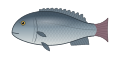
Size: Most are 0.5–1.5 kg, and a fish over 2 kg is a trophy. Loskop Dam produced a 3.11 kg blue kurper in 2003, reported as a world record.
Where: Native from the lower Zambezi south through Limpopo, Mpumalanga and KwaZulu-Natal to the Brak River in the Eastern Cape. Stocked into dams far beyond that, including the Orange River system; Loskop Dam is famous for big ones.
How to spot it
A deep, robust kurper with a long snout and a straight forehead. Females and young fish are silvery grey, often with a few dark blotches along the side and no stripes on the tail. Breeding males turn black with white cheeks and throat, red edges on the dorsal and tail fins, and a pointed, duck-bill snout.
Varieties and look-alikes
-
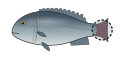 Blue Tilapia - Silvery grey with a plain tail and a straight forehead; at most a few faint blotches on the side.
-
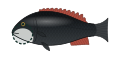 Breeding male - Black all over with a white throat and cheeks, red-edged fins and a pointed snout.
-
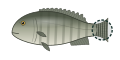 Nile Tilapia - Dark vertical stripes right across the tail fin; a blue kurper's tail has none.
-
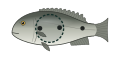 Threespot Tilapia - Three or four round black spots in a row along the side; found only in the Zambezi, Okavango and Kafue systems.
What it eats
Mostly algae and plant matter, plus insects, worms, small shrimps and fish fry. Big fish eat small fish too. In autumn they often graze on green algae to fatten up before winter.
Where it feeds
- Reed beds, weed edges and rocky banks in 1–4 m of water
- Warm bays and shallows on sunny days, often in shoals near the surface
- Sandy shallows where males dig nests in summer
- Deeper water near drop-offs after a cold front
How to catch it
The classic way is a bunch of earthworms under an adjustable bobber, with the bait just touching the bottom. Bread and mielies on a small hook also work, and kurper come to pap. Use light line and a size 6–12 hook; go bigger for Loskop-size fish. Fly anglers do well with small nymphs and Woolly Buggers on a 5–6 weight rod.
| Way of fishing | How well it works |
|---|---|
| Bait on the bottomA sinker holds your bait still on the bottom. | Works well |
| Under a bobberA bobber is a small buoy on your line: it holds the bait off the bottom and dips under when a fish bites. | Best |
| Pap, mielies, boilies and floatsSweet baits on the hook (pap, mielies, boilies or floats), with more thrown in around them. | Works well |
| Natural or dead baitReal food on the hook: worms, liver, sardine, chokka. | Best |
| Live baitA small live fish or other live creature on the hook. | Not used |
| LuresArtificial baits you cast and reel in: spinners, spoons, plastics. | Sometimes |
| Fly fishingLight artificial flies, cast with a fly rod. | Works well |
Baits and lures that work
- Earthworms
- Bread
- Pap
- Sweetcorn
- Nymphs
- Streamers and baitfish flies
- Soft plastics
- Spinners
Flavours it likes
- Krill
- Crustacean
- Garlic
They are not fussy about flavour; fresh worms and fresh bread do most of the work. In pap or dough, krill, prawn and garlic smells help.
When it bites
Time of day
| Time | Bite |
|---|---|
| Dawn | Best |
| Day | Best |
| Midday | Good |
| Dusk | Best |
| Night | Rarely |
Blue kurper feed through the day, with peaks early in the morning and late in the afternoon. Night fishing is slow.
Best months
- Best: January, February, March, October, November, December
- Good: April, May, September
Best from October to March, and hot summer days are often the best of all. In autumn they feed hard before winter, and in cold water they go deep and stop biting.
What affects the bite
| Condition | What it likes | Effect on the bite |
|---|---|---|
| Water temperature | Best at 22–31 °C | High |
| Time of day | Best during the day | Medium |
| Air pressure | Best when steady or falling | High |
| Cloud cover | Best on clear days | Medium |
| Wind | Best with a light breeze | Low |
| Rain | Best in dry weather | Medium |
| Water clarity | Hardly matters | Low |
| Moon phase | Hardly matters | Low |
| Spawning | Feeds hard before and after spawning | Medium |
High means it makes a big difference to whether this fish bites. Low means it hardly matters.
Tips
- Big blue kurper are wary and can be line shy, so use a fine leader and keep still on the bank.
- Look for shoals making wakes along the reeds, and cast just ahead of them.
- Small fish can mean big fish nearby; try slightly deeper water before you move.
Good to know: Blue kurper are listed as Vulnerable, mainly because they breed with invasive Nile tilapia. Release big fish and never move live kurper between dams.
Are they biting today?
BaitLine's fishing forecast scores today's conditions for Blue Tilapia hour by hour - free for everyone. Sign up free and get the whole Fishing guide in the app.