
Slinger
Chrysoblephus puniceus
The most common reef fish off KZN and southern Mozambique, and the bread-and-butter catch of ski-boat bottom fishing.
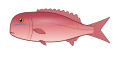
Size: Most are 25–35 cm and about 0.4 kg, and they can pass 50 cm. The SA angling record is 4 kg, caught in KZN in 1979.
Where: From central Mozambique down to Algoa Bay, with the main stock between southern Mozambique and Coffee Bay. Most are caught off KZN.
How to spot it
A deep bream with a very steep, almost straight forehead that rises to a ridge in front of the dorsal fin. Pink-red with a blue sheen, a bright blue line under the eye and a dark spot where the pectoral fin joins the body. Big fish have long, pointed tail tips.
Varieties and look-alikes
-
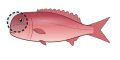 Slinger - Pink-red with a very steep forehead and a bright blue line under the eye; no white marks.
-
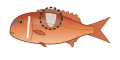 Red Roman - Orange-red, with a white saddle on the back, a white bar on the gill cover and a blue line between the eyes.
-
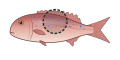 Santer - Pink above and silver below, with small blue spots on the upper body and a more pointed snout.
What it eats
Crabs, shrimps and other crustaceans, shellfish, small fish, brittle stars and sea urchins it finds on the reef.
Where it feeds
- Rocky reefs offshore from 20–130 m, most often in 30–50 m
- Young fish on shallower reefs in 10–60 m
- Each fish stays on its home reef, so spots you mark keep producing
How to catch it
Bottom fish from a ski-boat on reef in 30–50 m, at anchor or on a drift. Slinger have small mouths, so use a trace with two or three small hooks (1/0–2/0) and small baits such as chokka with a tentacle or a strip of fish. The size of the bait matters more than the size of the hook. Keep the bait just off the bottom and wind steadily when the rod pulls down.
| Way of fishing | How well it works |
|---|---|
| Bait on the bottomA sinker holds your bait still on the bottom. | Best |
| Under a bobberA bobber is a small buoy on your line: it holds the bait off the bottom and dips under when a fish bites. | Not used |
| Natural or dead baitReal food on the hook: worms, liver, sardine, chokka. | Best |
| Live baitA small live fish or other live creature on the hook. | Not used |
| LuresArtificial baits you cast and reel in: spinners, spoons, plastics. | Sometimes |
| TrollingLures or bait pulled behind a moving boat. | Not used |
| Fly fishingLight artificial flies, cast with a fly rod. | Not used |
Baits and lures that work
- Chokka (squid)
- Fish strips or dead fish
- Sardine
- Metal jigs
Flavours it likes
- Squid
- Fish
- Crustacean
Slinger find food by smell on the reef. Small, fresh baits of chokka or fish strip catch more than big lumps of bait.
When it bites
Time of day
| Time | Bite |
|---|---|
| Dawn | Best |
| Day | Best |
| Midday | Good |
| Dusk | Good |
| Night | Rarely |
Slinger bite in daylight, best in the morning. They hardly feed at night.
Best months
- Best: July, August, September, October
- Good: January, February, March, April, May, June, November, December
Slinger bite all year. They spawn from August to October and keep feeding, so late winter and spring are often busy on the reefs.
What affects the bite
| Condition | What it likes | Effect on the bite |
|---|---|---|
| Water temperature | Best at 19–25 °C | Low |
| Time of day | Best during the day | Medium |
| Tide | Hardly matters | Low |
| Swell and surf | Best when the sea is calm | High |
| Air pressure | Best when steady or falling | Medium |
| Cloud cover | Hardly matters | Low |
| Wind | Best when it is calm | High |
| Rain | Hardly matters | Low |
| Water clarity | Hardly matters | Low |
| Moon phase | Hardly matters | Low |
| Spawning | Hardly changes | Low |
High means it makes a big difference to whether this fish bites. Low means it hardly matters.
Tips
- Feeling pecks but hooking nothing? Change to smaller hooks and smaller baits.
- Strips cut from small red fish make a tough bait that stays on the hook.
- Save every reef where you catch slinger on your GPS; they stay on the same reefs.
Good to know: Check the current rules: slinger have a minimum size of 25 cm and a daily bag limit of 5 per person. All slinger start life as females and only the big ones are males, so taking too many big fish hurts the stock.
Are they biting today?
BaitLine's fishing forecast scores today's conditions for Slinger hour by hour - free for everyone. Sign up free and get the whole Fishing guide in the app.