Red Stumpnose
Chrysoblephus gibbiceps
A slow-growing, deep-bodied red reef fish of the Cape south coast, also called Miss Lucy, mostly caught from boats.
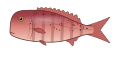
Size: Common up to about 50 cm, with a maximum of 75 cm. The SA spearfishing record is 8.1 kg. They grow very slowly and can live for over 40 years.
Where: Endemic to South Africa, from Cape Point to East London. Most common from Cape Point to Arniston, from Jeffreys Bay to East London and off the southern Transkei.
How to spot it
A deep red to orange-red fish with golden flecks, 5–7 faint darker red bars and many small black flecks on the upper body. The head is very steep, with a slight dip between the snout and the eyes, and big males grow a large bulging forehead. The soft fins are partly blackish and the pelvic fins have black edges.
Varieties and look-alikes
-
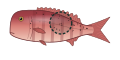 Red Stumpnose - Red with faint darker bars and many small black flecks on the upper body.
-
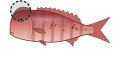 Red stumpnose, big male - Big males grow a large, bulging forehead above the eyes.
-
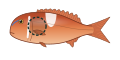 Red Roman - Orange-red with one white saddle bar behind the head and a blue line under the eye.
-
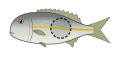 Cape Stumpnose - Silver, not red, with a yellow side band; an estuary and inshore fish.
What it eats
Eats brittle stars, snails, worms, sea urchins, octopus and crabs on the reef. Young fish eat softer food, and adults crush hard shells with their molars.
Where it feeds
- Offshore reefs from about 15 m to 100 m deep
- Flat reef with scattered rock, and pinnacles or ledges that drop onto it
- Shallow rocky reefs (young fish)
How to catch it
Fish from a boat over reef with the bait on the bottom: tie the hook on a 25–30 cm line and the sinker on a slightly longer line, so the hook sits just off the reef and doesn't snag. Bait with chokka, sardine or octopus. The bite is often gentle, so braid helps you feel it. Once you find fish, stay on the spot: they live in small areas and often travel in pairs.
| Way of fishing | How well it works |
|---|---|
| Bait on the bottomA sinker holds your bait still on the bottom. | Best |
| Under a bobberA bobber is a small buoy on your line: it holds the bait off the bottom and dips under when a fish bites. | Not used |
| Natural or dead baitReal food on the hook: worms, liver, sardine, chokka. | Best |
| Live baitA small live fish or other live creature on the hook. | Not used |
| LuresArtificial baits you cast and reel in: spinners, spoons, plastics. | Sometimes |
| TrollingLures or bait pulled behind a moving boat. | Not used |
| Fly fishingLight artificial flies, cast with a fly rod. | Not used |
Baits and lures that work
- Chokka (squid)
- Sardine
- Octopus
- Crabs
Flavours it likes
- Squid
- Fish
Fresh chokka and sardine work best. Tie a strip of sardine onto chokka with thin cotton for extra scent.
When it bites
Time of day
| Time | Bite |
|---|---|
| Dawn | Good |
| Day | Good |
| Midday | Good |
| Dusk | Good |
| Night | Rarely |
A daylight fish of deep water, where changes in light matter less. They bite through the day, and dawn and dusk are not much better than midday.
Best months
- Best: January, February, October, November, December
- Good: March, April, May, June, July, August, September
Summer is best: they spawn from October to January and often shoal up from December to February. Off Struisbaai, catches also pick up from May to July.
What affects the bite
| Condition | What it likes | Effect on the bite |
|---|---|---|
| Water temperature | Best at 13–18 °C | Low |
| Time of day | Best during the day | Low |
| Tide | Hardly matters | Low |
| Swell and surf | Best when the sea is calm | High |
| Air pressure | Best when it is falling | Medium |
| Cloud cover | Hardly matters | Low |
| Wind | Best when it is calm | High |
| Rain | Hardly matters | Low |
| Water clarity | Hardly matters | Low |
| Moon phase | Hardly matters | Low |
| Spawning | Feeds hard before and after spawning | Medium |
High means it makes a big difference to whether this fish bites. Low means it hardly matters.
Tips
- Pick a calm day: a big swell or strong wind stops deep-reef boat fishing.
- Fish ahead of a cold front, when they often feed hard.
- Release fish from deep water with a release weight, so they get back down to the reef.
Good to know: Check the current rules: red stumpnose have a 30 cm minimum size and a bag limit of 1 per person per day. The stock has fallen to a few percent of its old size, so consider releasing them.
Are they biting today?
BaitLine's fishing forecast scores today's conditions for Red Stumpnose hour by hour - free for everyone. Sign up free and get the whole Fishing guide in the app.