
Potato Bass
Epinephelus tukula
A huge, spotted grouper of northern KZN and Mozambique reefs. It is a prohibited species in South Africa: if you hook one, release it.
Size: Adults are often more than 1 m long and can pass 2 m. The SA angling record is 65.8 kg, caught in KZN in 1956, long before the species was protected.
Where: Reefs of northern KZN, south to about Protea Banks, and southern Mozambique. They are most common in the St Lucia and Maputaland marine protected areas, such as at Sodwana.
How to spot it
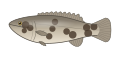
A big, heavy rockcod with a wide mouth, a rounded tail and a long, spiny dorsal fin. It is pale grey-brown with large, dark, potato-shaped blotches all over the body. Those blotches give it its name.
What it eats
Reef fish, crabs and other crustaceans, and rays. It waits near ledges and caves and ambushes its prey.
Where it feeds
- Deep reefs, pinnacles and seamounts with strong current, 10–400 m
- Caves and ledges on the reef
- Young fish in tidal pools, gullies and shallow reefs in the surf zone
How to catch it
Do not target potato bass: it is illegal to catch or keep one in South Africa. They are sometimes hooked by accident on big live or dead baits meant for rockcod and other reef fish. If one takes your bait, bring it up, keep it in the water if you can, take the hook out quickly or cut the line close to the hook, and let it go.
| Way of fishing | How well it works |
|---|---|
| Bait on the bottomA sinker holds your bait still on the bottom. | Sometimes |
| Under a bobberA bobber is a small buoy on your line: it holds the bait off the bottom and dips under when a fish bites. | Not used |
| Natural or dead baitReal food on the hook: worms, liver, sardine, chokka. | Sometimes |
| Live baitA small live fish or other live creature on the hook. | Sometimes |
| LuresArtificial baits you cast and reel in: spinners, spoons, plastics. | Not used |
| TrollingLures or bait pulled behind a moving boat. | Not used |
| Fly fishingLight artificial flies, cast with a fly rod. | Not used |
Baits and lures that work
- Live baitfish
- Fish strips or dead fish
- Octopus
Flavours it likes
Not a fish to chase with bait or scent. It eats live reef fish and other big natural baits, which is why big baits on deep reefs sometimes hook one.
When it bites
Time of day
| Time | Bite |
|---|---|
| Dawn | Best |
| Day | Good |
| Midday | Slow |
| Dusk | Best |
| Night | Slow |
Like most groupers it hunts mainly in the low light around dawn and dusk. If you fish big baits on deep reef at those times, be ready to release one.
Best months
- Good: January, February, March, April, May, June, July, August, September, October, November, December
Potato bass stay on the same reef all year. They spawn in spring and summer, and they are protected in every month.
What affects the bite
| Condition | What it likes | Effect on the bite |
|---|---|---|
| Water temperature | Best at 22–28 °C | Low |
| Time of day | Best at dawn and dusk | Medium |
| Tide | Hardly matters | Low |
| Swell and surf | Best when the sea is calm | High |
| Air pressure | Best when steady or falling | Medium |
| Cloud cover | Best on overcast days | Medium |
| Wind | Best when it is calm | High |
| Rain | Hardly matters | Low |
| Water clarity | Hardly matters | Low |
| Moon phase | Hardly matters | Low |
| Spawning | Hardly changes | Low |
High means it makes a big difference to whether this fish bites. Low means it hardly matters.
Tips
- Learn the big dark blotches so you can recognise one at the boat.
- Release it as fast as you can, with as little handling as possible.
- Keep a dehooker or long-nose pliers handy so you can unhook it without lifting it out of the water.
Good to know: Check the current rules: potato bass is on the prohibited species list, so nobody may catch, keep or sell one, and any you hook must go back with as little harm as possible. It has been protected since 1992, after spearfishing took out many of the fish on shallow reefs.
Are they biting today?
BaitLine's fishing forecast scores today's conditions for Potato Bass hour by hour - free for everyone. Sign up free and get the whole Fishing guide in the app.