
Red Roman
Chrysoblephus laticeps
A bright orange-red reef fish of the Cape coast, and a favourite on ski-boats from False Bay to the Eastern Cape.
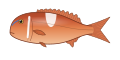
Size: Most roman landed are 30–35 cm and under 1 kg, and they can reach 50 cm. The heaviest on record in South Africa is a 4.57 kg spearfishing record.
Where: From Cape Point to about Port St Johns, with the most fish on reefs from False Bay to the Eastern Cape. Rare on the West Coast.
How to spot it
A deep, oval bream, bright orange-red all over, with a large eye and a strong, slightly forked tail. Look for a white saddle on the back under the middle of the dorsal fin, a white bar on the gill cover and a blue line across the head between the eyes. The white marks often fade once the fish is dead.
Varieties and look-alikes
-
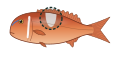 Red Roman - Orange-red, with a white saddle on the back, a white bar on the gill cover and a blue line between the eyes.
-
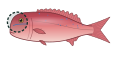 Slinger - Pink-red with a very steep forehead and a bright blue line under the eye; no white marks.
-
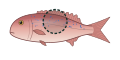 Santer - Pink above and silver below, with small blue spots on the upper body and a more pointed snout.
What it eats
Adults eat mostly feather stars, brittle stars, squid and cuttlefish, plus some crabs and worms. Young fish eat mainly worms and small shrimps.
Where it feeds
- High and low rocky reefs, pinnacles and ledges
- Young fish on shallow reefs; bigger fish on deeper reefs down to about 100 m
- Each fish stays on its own small patch of reef, so a good spot keeps producing
How to catch it
Fish from a boat at anchor or on a slow drift over reef, with a paternoster rig of one or two hooks above the sinker. Bait 1/0–3/0 hooks with chokka, octopus or sardine, and use a 30–60 g sinker in water under 20 m, heavier when it is deeper or the current is strong. Roman bite hard and fast, so wind steadily as soon as the rod loads. Small jigs worked near the bottom also catch them.
| Way of fishing | How well it works |
|---|---|
| Bait on the bottomA sinker holds your bait still on the bottom. | Best |
| Under a bobberA bobber is a small buoy on your line: it holds the bait off the bottom and dips under when a fish bites. | Not used |
| Natural or dead baitReal food on the hook: worms, liver, sardine, chokka. | Best |
| Live baitA small live fish or other live creature on the hook. | Not used |
| LuresArtificial baits you cast and reel in: spinners, spoons, plastics. | Sometimes |
| TrollingLures or bait pulled behind a moving boat. | Not used |
| Fly fishingLight artificial flies, cast with a fly rod. | Not used |
Baits and lures that work
- Chokka (squid)
- Octopus
- Sardine
- Fish strips or dead fish
- Redbait
- White mussel
- Metal jigs
Flavours it likes
- Squid
- Fish
- Crustacean
Roman find food by smell and sight on the reef. Fresh, tough baits work best: chokka and octopus stay on the hook while small fish pick soft sardine off.
When it bites
Time of day
| Time | Bite |
|---|---|
| Dawn | Best |
| Day | Best |
| Midday | Good |
| Dusk | Good |
| Night | Rarely |
Roman feed through the day, with a slight edge at first light. They hardly bite at night.
Best months
- Best: February, March, April
- Good: January, May, June, July, August, September, October, November, December
Roman are on the reefs all year and keep biting while they spawn, from about October to February. Cold upwelled water below about 13 °C slows the bite, which often happens after strong south-easters in summer.
What affects the bite
| Condition | What it likes | Effect on the bite |
|---|---|---|
| Water temperature | Best at 14–21 °C | Medium |
| Time of day | Best during the day | Medium |
| Tide | Hardly matters | Low |
| Swell and surf | Best when the sea is calm | High |
| Air pressure | Best when steady or falling | Medium |
| Cloud cover | Hardly matters | Low |
| Wind | Best when it is calm | High |
| Rain | Hardly matters | Low |
| Water clarity | Hardly matters | Low |
| Moon phase | Hardly matters | Low |
| Spawning | Hardly changes | Low |
High means it makes a big difference to whether this fish bites. Low means it hardly matters.
Tips
- Thread a thin strip of chokka onto the hook first and put softer bait over it, so something stays on when small fish nibble.
- Use circle hooks if you plan to release fish; they hook in the corner of the mouth.
- Mind the gill covers: they are razor sharp and cut hands.
Good to know: Check the current rules: roman have a minimum size of 30 cm and a daily bag limit of 2 per person. A roman of 45 cm is likely 20 years or older, so release big fish where you can.
Are they biting today?
BaitLine's fishing forecast scores today's conditions for Red Roman hour by hour - free for everyone. Sign up free and get the whole Fishing guide in the app.