
Papermouth
Enteromius mattozi
A bright silver, orange-finned barb of Limpopo-system rivers and dams that hunts small fish and hits small spinners and streamer flies hard.
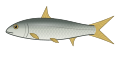
Size: It grows to about 40 cm and 1.4 kg, and lives up to about 9 years.
Where: The Limpopo system: the Limpopo, Crocodile and Olifants rivers, dams such as Loskop, Hartbeespoort, Vaalkop, Rust de Winter and Renosterkop, and farm dams in the Lowveld. In Zimbabwe it lives in rivers and dams that drain to the Limpopo, such as those in the Matobo area, and it is rare in the Zambezi system.
How to spot it
A slim, bright silver fish with yellow-orange fins and a forked tail. The mouth sits at the tip of the snout and can push forwards to grab prey. The front ray of the dorsal fin is a stiff spine with a saw-toothed edge.
Varieties and look-alikes
-
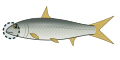 Papermouth - Bright silver with yellow-orange fins, and the mouth sits at the tip of the snout.
-
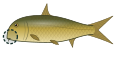 Smallmouth Yellowfish - Golden-olive, with a small mouth set under a short, rounded snout.
What it eats
Young fish eat plankton and small insects. From about 23 cm long, papermouth eat almost only small fish, including their own young. They also eat waterlily seeds and some algae.
Where it feeds
- Large, deep and cooler river pools
- Drop-offs and steep banks in dams
- Where rivers flow into and out of dams
- Around rocks and other structure
How to catch it
Light spinning tackle with small spinners, spoons and small crankbaits is the easiest way, cast near drop-offs, steep banks and inlets. Fly anglers use a light 3–5 weight rod with streamers and wet flies that look like small fish or tadpoles, such as Woolly Buggers, Zonkers and Clouser Minnows. A slow retrieve often works best, but try a fast one too. Smaller fish also take worms or bread fished under a bobber.
| Way of fishing | How well it works |
|---|---|
| Bait on the bottomA sinker holds your bait still on the bottom. | Sometimes |
| Under a bobberA bobber is a small buoy on your line: it holds the bait off the bottom and dips under when a fish bites. | Sometimes |
| Pap, mielies, boilies and floatsSweet baits on the hook (pap, mielies, boilies or floats), with more thrown in around them. | Sometimes |
| Natural or dead baitReal food on the hook: worms, liver, sardine, chokka. | Sometimes |
| Live baitA small live fish or other live creature on the hook. | Not used |
| LuresArtificial baits you cast and reel in: spinners, spoons, plastics. | Best |
| Fly fishingLight artificial flies, cast with a fly rod. | Best |
Baits and lures that work
- Spinners
- Streamers and baitfish flies
- Spoons
- Crankbaits and plugs
- Earthworms
- Bread
Flavours it likes
It is a hunter that strikes at flash and movement, so you do not need flavour. A small silver lure or fly that looks like a baitfish works best.
When it bites
Time of day
| Time | Bite |
|---|---|
| Dawn | Best |
| Day | Good |
| Midday | Slow |
| Dusk | Best |
| Night | Slow |
Early morning and evening are best, and it is slower in the bright middle of the day. Overcast days help.
Best months
- Best: January, February, March, October
- Good: April, May, September, November, December
October and late summer into early autumn (January to March) are the best months. When the first big summer floods come, the adults run upriver to spawn and the dams go quieter. Winter is slow.
What affects the bite
| Condition | What it likes | Effect on the bite |
|---|---|---|
| Water temperature | Best at 19–27 °C | High |
| Time of day | Best at dawn and dusk | Medium |
| Air pressure | Best when it is falling | Medium |
| Cloud cover | Best on overcast days | High |
| Wind | Best with a light breeze | Medium |
| Rain | Best in dry weather | Medium |
| Water clarity | Best in clear water | Medium |
| Moon phase | Hardly matters | Low |
| Spawning | Feeds hard before and after spawning | Medium |
High means it makes a big difference to whether this fish bites. Low means it hardly matters.
Tips
- Finding the fish is the hard part: once you catch one, others are usually close by.
- Scale down: small lures and flies suit this fish better than big ones.
- Handle them gently and release them; numbers are dropping in some waters.
Good to know: Numbers seem to be dropping in places, so anglers are asked to release papermouth. Check the current rules: you need a provincial angling licence for public dams and rivers.
Are they biting today?
BaitLine's fishing forecast scores today's conditions for Papermouth hour by hour - free for everyone. Sign up free and get the whole Fishing guide in the app.