
Longfin Eel
Anguilla mossambica
The commonest eel in South African rivers, a plain olive-brown night feeder that reaches further inland and into cooler water than the other eels.
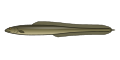
Size: Most are under 80 cm long. Big females pass 1 m and can weigh 5–6 kg, while males stay much smaller.
Where: Rivers of the south and east coast from Cape Agulhas to KwaZulu-Natal and further north. It climbs higher and further inland than any other South African eel, into upper river reaches and dams.
How to spot it
A long, slimy eel with a pointed head and a lower jaw that juts out. It is plain olive to brown or almost black on the back and paler below, with no mottling. The dorsal fin starts far forward, a little closer to the gill opening than to the vent, well ahead of the anal fin. Eels about to migrate to the sea turn silvery on the belly.
Varieties and look-alikes
-
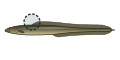 Longfin Eel - Plain olive to brown, and the dorsal fin starts far forward, well ahead of the anal fin.
-
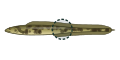 Giant mottled eel - Dark blotches all over a yellowish body; the longfin is plain.
-
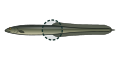 Shortfin eel - The dorsal fin starts almost above the vent, much further back than on a longfin.
What it eats
A sit-and-wait night hunter that eats fish and crabs above all, plus frogs, insects and dead animals. It stays in one home pool or hole for years.
Where it feeds
- Deep pools and holes under rocks, roots and undercut banks
- Below weirs, waterfalls and dam walls
- Shallow edges at night when the water is muddy
How to catch it
Fish after dark on the bottom near rocks and deep holes, with earthworms, chicken liver or a fish strip on a running sinker rig and a short, strong leader. Strike early so the hook doesn't go deep, and lift the eel away from cover before it backs into a hole. A worm under a bobber along a quiet bank also works.
| Way of fishing | How well it works |
|---|---|
| Bait on the bottomA sinker holds your bait still on the bottom. | Best |
| Under a bobberA bobber is a small buoy on your line: it holds the bait off the bottom and dips under when a fish bites. | Sometimes |
| Pap, mielies, boilies and floatsSweet baits on the hook (pap, mielies, boilies or floats), with more thrown in around them. | Not used |
| Natural or dead baitReal food on the hook: worms, liver, sardine, chokka. | Best |
| Live baitA small live fish or other live creature on the hook. | Sometimes |
| LuresArtificial baits you cast and reel in: spinners, spoons, plastics. | Not used |
| Fly fishingLight artificial flies, cast with a fly rod. | Not used |
Baits and lures that work
- Earthworms
- Chicken liver
- Fish strips or dead fish
- Freshwater crabs
- Sardine
Flavours it likes
- Liver
- Fish
- Blood
It hunts by smell, so fresh, bloody baits like liver and fish work best. Change your bait often so the scent stays strong.
When it bites
Time of day
| Time | Bite |
|---|---|
| Dawn | Good |
| Day | Rarely |
| Midday | Rarely |
| Dusk | Best |
| Night | Best |
Night is best, from dusk until a few hours after dark. Dawn can also be good, especially in winter, but bright days are very slow.
Best months
- Best: January, February, November, December
- Good: March, April, September, October
Summer is best and winter is slow. Muddy water after spring rain and the days after a flood often give the best fishing.
What affects the bite
| Condition | What it likes | Effect on the bite |
|---|---|---|
| Water temperature | Best at 18–27 °C | High |
| Time of day | Best at night | High |
| Air pressure | Best when it is falling | Medium |
| Cloud cover | Best on overcast days | Medium |
| Wind | Best with a light breeze | Medium |
| Rain | Best after rain | Medium |
| Water clarity | Best in murky water | Medium |
| Moon phase | Best around new moon | Medium |
| Spawning | Hardly changes | Low |
High means it makes a big difference to whether this fish bites. Low means it hardly matters.
Tips
- Use a swivel above your leader, because a hooked eel rolls and twists the line.
- Hold it with a dry cloth or newspaper to get a grip through the slime.
- Check where the dorsal fin starts: well ahead of the vent on a plain-coloured eel means a longfin.
Good to know: Longfins live in fresh water for many years before swimming back to the sea to breed once, and their numbers have dropped where dams and weirs block their way upstream. Release the eels you don't need.
Are they biting today?
BaitLine's fishing forecast scores today's conditions for Longfin Eel hour by hour - free for everyone. Sign up free and get the whole Fishing guide in the app.