
Barber
Clarias gariepinus
South Africa's big, tough catfish of warm dams and rivers, which bites best at dusk and after dark on smelly meat baits.
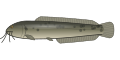
Size: Fish of 2–10 kg are common, and big dams such as Koppies and Vanderkloof give fish of 15–20 kg. The IGFA all-tackle world record, 42.2 kg, came from the Orange River at Kakamas in 2003.
Where: Found naturally north of the Orange River and the Umtamvuna River, in rivers, floodplains, pans and dams, and now spread into the Eastern and Western Cape. It copes with warm, muddy water low in oxygen, because it can breathe air.
How to spot it
A long, scaleless catfish with a broad, flat, bony head, small eyes and four pairs of long barbels around a wide mouth. The back is dark grey, olive or brown, often blotched, and the belly is cream. One long dorsal fin runs along most of the back with no fleshy fin behind it, and a long anal fin runs underneath. Each pectoral fin has a hard spine.
Varieties and look-alikes
-
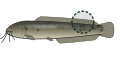 Barber - One long dorsal fin runs from behind the head almost to the tail, with no fleshy fin behind it.
-
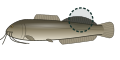 Vundu Catfish - A shorter rayed dorsal fin, then a separate dark, fleshy fin with no rays, and much longer barbels.
What it eats
It eats almost anything: fish, frogs, insects, birds, small mammals, seeds, fruit and dead animals. It finds food by smell and touch with its barbels, and groups of barber sometimes herd small fish into the shallows.
Where it feeds
- Muddy inflows and river mouths, especially after rain
- Warm shallows and reed edges at night
- Deep holes, channel edges and pools below weirs
- On the surface, where whiskers and fins break the water
How to catch it
Fish chicken liver, ox heart or a fish head on the bottom on a running sinker rig, with a 4/0–6/0 hook and a strong nylon leader. Give the fish a moment to take the bait and move off before you strike, then keep it out of snags. Fly anglers cast big dark streamers or a popper to fish in the shallows, splashing the fly down to call them.
| Way of fishing | How well it works |
|---|---|
| Bait on the bottomA sinker holds your bait still on the bottom. | Best |
| Under a bobberA bobber is a small buoy on your line: it holds the bait off the bottom and dips under when a fish bites. | Sometimes |
| Pap, mielies, boilies and floatsSweet baits on the hook (pap, mielies, boilies or floats), with more thrown in around them. | Sometimes |
| Natural or dead baitReal food on the hook: worms, liver, sardine, chokka. | Best |
| Live baitA small live fish or other live creature on the hook. | Works well |
| LuresArtificial baits you cast and reel in: spinners, spoons, plastics. | Sometimes |
| Fly fishingLight artificial flies, cast with a fly rod. | Works well |
Baits and lures that work
- Chicken liver
- Red meat and offal
- Fish strips or dead fish
- Sardine
- Earthworms
- Boilies
- Streamers and baitfish flies
Flavours it likes
- Liver
- Blood
- Fish
Barber hunt by smell, so blood, liver and fish oil work best. Soak baits in a barber dip or ox blood, or squirt blended liver and sardine over your spot.
When it bites
Time of day
| Time | Bite |
|---|---|
| Dawn | Good |
| Day | Slow |
| Midday | Rarely |
| Dusk | Best |
| Night | Best |
Dusk and the first hours of dark are best, with another good spell before dawn. Bright, hot middays are slow.
Best months
- Best: January, February, March, October, November, December
- Good: April, September
Fish for them from September to April, when the water is warm. The first summer rains bring them into the shallows to spawn, and in cold winters they lie in the mud and hardly feed.
What affects the bite
| Condition | What it likes | Effect on the bite |
|---|---|---|
| Water temperature | Best at 22–31 °C | High |
| Time of day | Best at dawn, dusk and night | High |
| Air pressure | Best when it is falling | Medium |
| Cloud cover | Best on overcast days | Medium |
| Wind | Best with a light breeze | High |
| Rain | Best after rain | Medium |
| Water clarity | Best in murky water | Medium |
| Moon phase | Hardly matters | Low |
| Spawning | Hardly changes | Low |
High means it makes a big difference to whether this fish bites. Low means it hardly matters.
Tips
- Thread a piece of chicken heart on before the liver, or bind the liver with bait elastic, so small fish can't strip the hook.
- After a storm, fish where muddy water runs into the dam.
- Use a big landing net and set your drag firm, because a hooked barber heads straight for logs and weed.
Good to know: Each pectoral fin has a hard spine that the fish can raise and lock, so hold it firmly behind the head with a wet cloth. Check the current rules: in the Western Cape the barber is treated as an alien pest, and you may not move live fish between waters without a permit.
Are they biting today?
BaitLine's fishing forecast scores today's conditions for Barber hour by hour - free for everyone. Sign up free and get the whole Fishing guide in the app.