
Nile Perch
Lates niloticus
A giant perch of Lake Victoria, the Nile and Lake Nasser that does not occur in Southern Africa: a trophy for anglers travelling north.
Size: It can grow to about 2 m and 200 kg. The IGFA rod-and-line world record, 104 kg, came from Lake Nasser in Egypt in 2000.
Where: It does not occur in Southern Africa, and it is not found in the Zambezi system. It is native to the Nile (including Lake Nasser), Lake Albert, Lake Turkana, the Congo basin and West Africa, and was put into Lake Victoria in the 1950s.
How to spot it
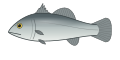
A big, deep-bodied silver fish with a blue-grey back and a dip in the forehead above the eye, so the back looks humped. The eye glows yellow, the mouth is large, and the tail is rounded. The tall, spiny first dorsal fin joins a soft second dorsal fin.
What it eats
Adults eat mainly fish, including smaller Nile perch, as well as small freshwater shrimps and insects. It waits on deep structure and follows tilapia and other baitfish into the shallows when they spawn.
Where it feeds
- Drop-offs where deep water rises fast to a shallow shelf
- Sunken islands, rocky points and flooded trees
- Deeper water, about 6–12 m, in the cooler months on Lake Nasser
- Big pools below falls and rapids, such as Murchison Falls on the Victoria Nile
How to catch it
Most fish are caught trolling big, deep-diving plugs over drop-offs and sunken islands, on strong boat rods with braid and a heavy leader. From the bank or an island, cast plugs or fish a live fish such as a tilapia, or a fish fillet, near deep water. The mouth is hard and bony, so set the hook firmly and use strong hooks and split rings.
| Way of fishing | How well it works |
|---|---|
| Bait on the bottomA sinker holds your bait still on the bottom. | Works well |
| Under a bobberA bobber is a small buoy on your line: it holds the bait off the bottom and dips under when a fish bites. | Sometimes |
| Pap, mielies, boilies and floatsSweet baits on the hook (pap, mielies, boilies or floats), with more thrown in around them. | Not used |
| Natural or dead baitReal food on the hook: worms, liver, sardine, chokka. | Works well |
| Live baitA small live fish or other live creature on the hook. | Best |
| LuresArtificial baits you cast and reel in: spinners, spoons, plastics. | Best |
| Fly fishingLight artificial flies, cast with a fly rod. | Sometimes |
Baits and lures that work
- Crankbaits and plugs
- Small live fish
- Fish strips or dead fish
- Soft plastics
- Metal jigs
Flavours it likes
Nile perch hunt by sight and by feeling movement, so the lure's size, depth and wobble matter most. With bait, use fresh or live fish.
When it bites
Time of day
| Time | Bite |
|---|---|
| Dawn | Best |
| Day | Good |
| Midday | Slow |
| Dusk | Best |
| Night | Good |
First light and early morning are best, with a slow spell in the afternoon heat and another chance at dusk. Bank anglers on the Nile also catch fish after dark.
Best months
- Best: January, February, March, April, June, December
- Good: May, July, August, September, October, November
On the Victoria Nile in Uganda the dry months (December–February and June–August) are best, and the heavy rains of September–November make the river milky. On Lake Nasser, March to June is prime, when fish come shallow to feed on spawning tilapia.
What affects the bite
| Condition | What it likes | Effect on the bite |
|---|---|---|
| Water temperature | Best at 23–30 °C | High |
| Time of day | Best at dawn and dusk | Medium |
| Air pressure | Best when it is falling | Medium |
| Cloud cover | Best on overcast days | Medium |
| Wind | Best with a light breeze | Medium |
| Rain | Best in dry weather | Medium |
| Water clarity | Best in clear water | Medium |
| Moon phase | Hardly matters | Low |
| Spawning | Hardly changes | Low |
High means it makes a big difference to whether this fish bites. Low means it hardly matters.
Tips
- Use a fish finder to find where deep water rises fast to a shelf or island: that is where the perch wait.
- Before the trip, fit your lures with strong hooks and split rings.
- Strong wind spoils more days on the big lakes than anything else, so plan to fish the calm mornings.
Good to know: Mind the sharp gill covers and the spiny dorsal fin when you handle one. The big perch of Lake Tanganyika in northern Zambia are related Lates species, not true Nile perch, and Nile perch must never be moved to new waters.
Are they biting today?
BaitLine's fishing forecast scores today's conditions for Nile Perch hour by hour - free for everyone. Sign up free and get the whole Fishing guide in the app.